


Precision surface execution
Three capabilities, each carried out by the person who quoted them. What each involves on site, the surfaces it lands on, and the split between what your studio supplies and what arrives in the van.
Surface-level installation only. Fabrication, printing and graphic design stay with your agency, which is the reason this arrangement works.
Vinyl application
Interior and exterior graphics and wraps, optically clear window films, architectural wraps and frosted privacy graphics. The film does what the file says only if the surface, the temperature and the method agree with it.
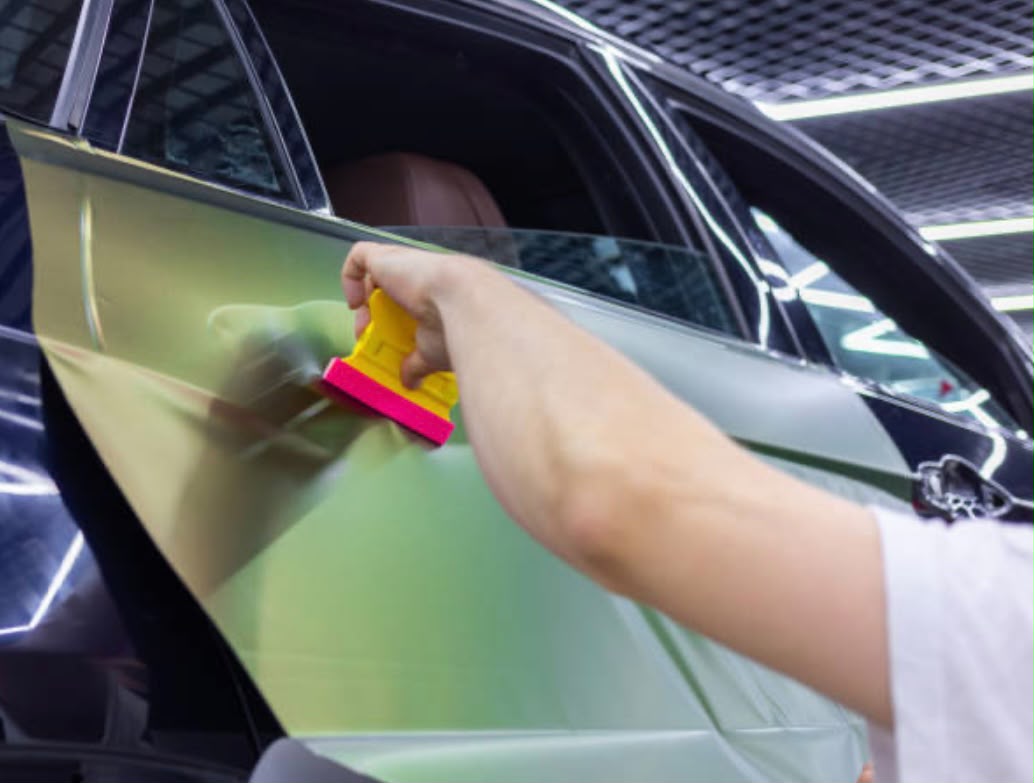
The application sequence
- Surface preparation, degreasing and dust control before any film is unrolled.
- Dry or wet application chosen by film type, panel size and substrate, not by preference.
- Hinge and squeegee method on large panels so alignment holds across the run.
- Post-heating and edge sealing on curves, rivets and corrugations.
- Weeding, tape work and trimming to reveal lines on cut lettering.
- Removal of failed or previous graphics, with adhesive residue cleared.
Typical vinyl work
What the glass decides
- Glass behaves differently by type. Textured glass needs a conformable film or it will lift.
- Freshly painted or plastered walls need full cure time before anything adheres.
- Powder-coated aluminium, ACM and dibond are reliable. Low surface energy plastics are not, without a primer.
- Exterior work is governed by substrate temperature and dew point, not the calendar.
- Compound curves and deep recesses are flagged at survey: they change the film spec and the time on site.
You supply
- Print-ready files with bleed, registration and panel numbering
- Printed and laminated material, delivered or collected
- Site address, access times and a named site contact
- Any client-side restrictions on noise, hours or working areas
We bring
- Application tooling, heat, tapes, blades and cleaning kit
- Access equipment by arrangement, with PASMA and IPAF cover
- CSCS certification for active construction sites
- Unbranded workwear, waste removal and completion photographs
Got film to hang and a date to hit? Send the artwork and the address.
Brief a vinyl job
Static signage
Mounting and finishing for internal and external rigid hoardings, dibond panels, sign trays and point-of-sale displays. Set out from a datum, fixed level, packed square and made good.
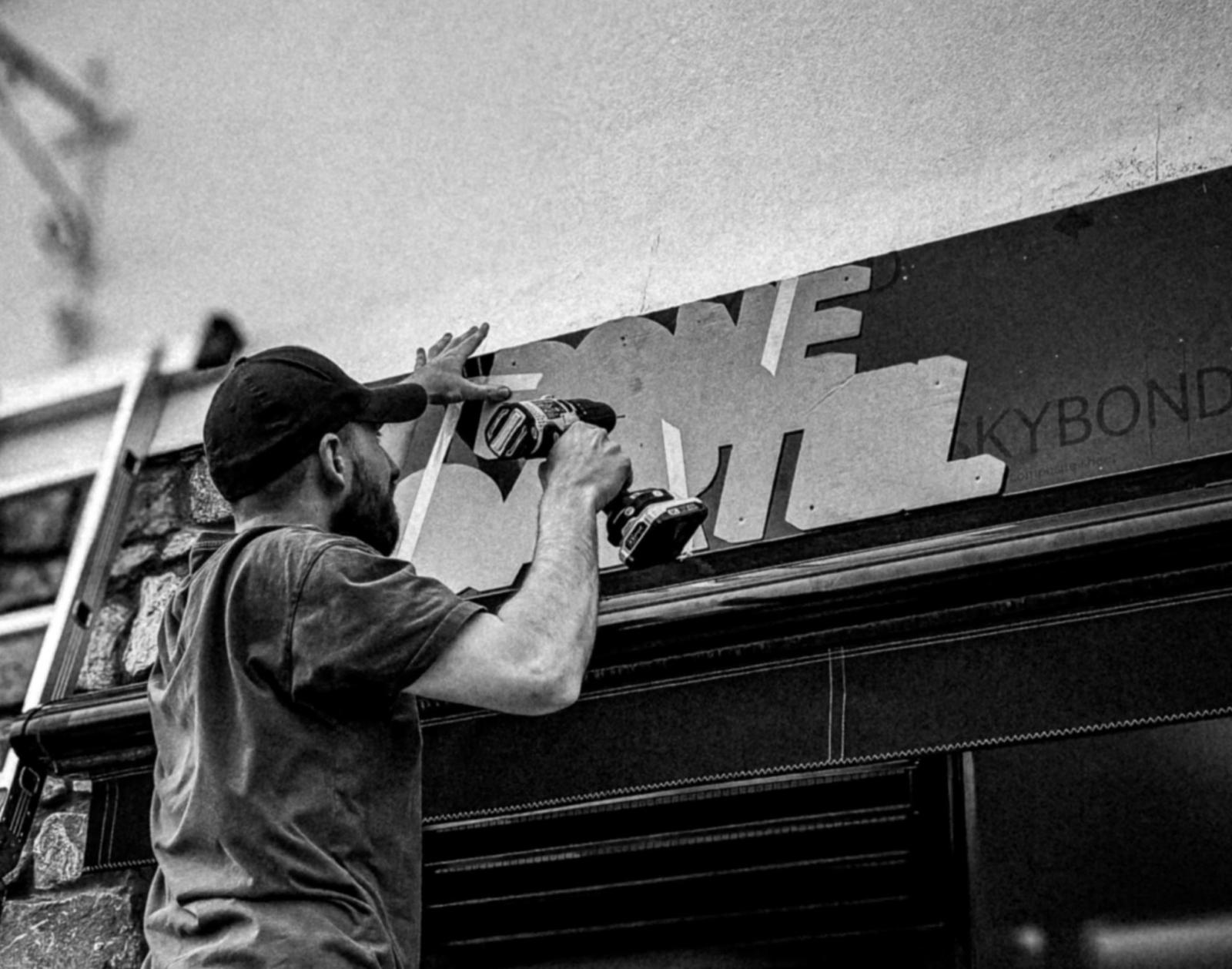
Setting out and fixing
- Setting out from a datum so a run of panels holds a single line across an uneven elevation.
- Mechanical fixing or bonding selected against the substrate and the panel weight.
- Packing and levelling to correct wall bow, then joint alignment across the run.
- Sign tray hanging on locator plates, with trims and silicone finished properly.
- Point-of-sale assembly and siting to a plan, including repeat layouts across stores.
- Removing redundant panels and making good the fixings behind them.
Typical signage work
What the substrate decides
- Masonry and blockwork take a standard anchor. Older render and soft brick often will not.
- Plasterboard needs the right cavity fixing and a weight limit agreed before anything is hung.
- Curtain walling and glazing systems are not drilled. Panels are bonded or clamped instead.
- Listed and leased buildings usually carry landlord conditions. Send them with the brief.
- Anything structural, welded or fabricated on site stays with your contractor.
You supply
- Fabricated panels, trays and any specified fixing kit
- Elevations or a setting-out drawing with heights and centres
- Delivery to site, or a collection point and window
- Landlord, centre management or principal contractor permissions
We bring
- Laser level, setting-out tools, cordless plant and a fixings stock
- Access equipment by arrangement, hired at cost where needed
- RAMS input and site inductions handled directly
- Making good, waste removal and completion photographs
Panels fabricated and nowhere to put them? Send the elevation.
Brief a signage jobSite surveys
Pre-installation measurements and environmental checks, so print files align with reality. A survey is cheaper than a reprint, and considerably cheaper than a second visit.
What a survey records
- Dimensioned measurements checked against your draft artwork, not against the drawing.
- Substrate identification and surface condition, including anything previously applied.
- Obstructions: handles, hinges, vents, alarm sensors, junction boxes and reveals.
- Access route, working window, parking, loading and lift dimensions.
- Work at height requirements and whether powered access can physically reach.
- Power availability, and conditions likely at the install date.
Where it fits
When it is worth it
- Before print on anything large format, bespoke or non-repeatable.
- At tender stage, when you need a defensible number before committing to a client.
- On multi-site rollouts, where one template has to fit buildings that are not identical.
- Where a previous installation failed and nobody has established why.
You supply
- Draft artwork and the site address
- A named site contact and access times
- Any landlord or centre management constraints
We bring
- Measured markups against your artwork
- A photographic record of every surface and obstruction
- A plain note of what will work, what will not, and what changes if you push it
- An installation time estimate you can quote against
Not sure the file will fit the wall? Have it measured before it prints.
Book a surveySend the scope, get a rate
Four questions covers most jobs: what, where, when, and whether the artwork exists yet. Everything else can be worked out on the reply.
Start a project briefPrefer email? info@ghostcrewing.co.uk. Prefer to talk? 01792 001 354, Monday to Friday.